
- News





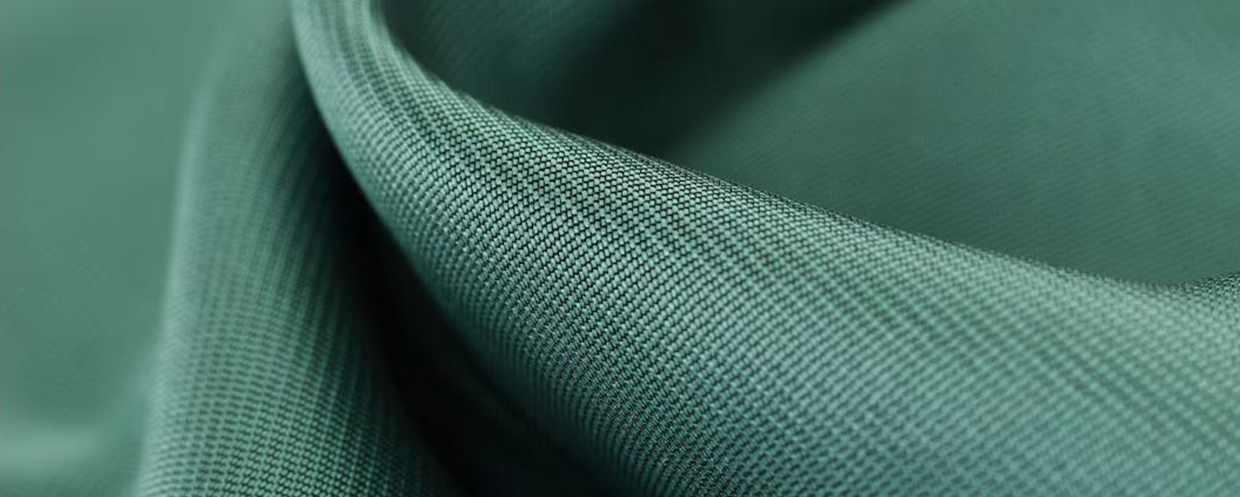
Recycled polyester fabric, also known as RPET fabric, is a new type of environmentally friendly recycled material. Its yarn is derived from waste mineral water bottles and cola bottles, which are processed through special technologies—hence its colloquial name "cola bottle eco-friendly fabric." Its environmental properties have made it highly favored in developed economies such as Europe and the United States, widely used in camisoles, shirts, skirts, children's clothing, scarves, cheongsams, ties, handkerchiefs, home textiles and other fields. The use of recycled yarn not only saves petroleum resources (6 tons of petroleum per ton of finished yarn) but also helps reduce air pollution and the greenhouse effect. In addition, the fabric is equipped with relevant certifications and hangtags to confirm its environmentally friendly recycled identity.
In contrast, conventional polyester (POLY) is also a common chemical fiber fabric. Its chemical name is polyethylene terephthalate (PET), featuring excellent tensile breaking strength and thermal stability. Thanks to these properties, conventional polyester is widely used in clothing, home textiles, decorations, industrial products and other fields. It has developed rapidly with high output, thus earning the title "the crown of chemical fibers."
Recycled polyester fabric (RPET) stands out for its unique environmental characteristics. Its yarn is made from waste mineral water bottles and cola bottles through a series of eco-friendly processes, transforming into "cola bottle eco-friendly fabric." The emergence of this fabric not only saves valuable petroleum resources (up to 6 tons of petroleum per ton of finished yarn) but also helps reduce air pollution and mitigate the greenhouse effect. Additionally, it comes with relevant environmental certifications and hangtags to prove its green recycled identity.
Conventional polyester (POLY), as a common chemical fiber fabric, also attracts much attention. Its chemical name is polyethylene terephthalate (PET). With excellent tensile breaking strength and thermal stability, it shines in clothing, home textiles, decorations, industrial products and other fields. It has developed rapidly with substantial output, hence the title "the crown of chemical fibers."
Recycled polyester and conventional polyester each have their own merits in performance. Recycled polyester is renowned for its unique environmental properties—after eco-friendly processing, it saves petroleum resources and reduces air pollution and the greenhouse effect. Conventional polyester, on the other hand, demonstrates superiority in multiple fields through its excellent tensile breaking strength and thermal stability. Both have distinct characteristics and together form two important branches of the polyester fabric family.
Recycled polyester fiber is slightly inferior in properties such as strength, while conventional polyester fiber has a relative advantage in this aspect.
Recycled polyester staple fiber uses polyester fabric, waste polyester bottle flakes, spinning waste silk and other materials as raw materials. Through processes including crushing, cleaning, drying, melt extrusion, spinning and so on, it finally forms polyester staple fiber of different lengths. This recycled polyester yarn not only reduces petroleum usage (saving 6 tons of petroleum per ton of finished product) but also significantly reduces carbon dioxide emissions. Compared with conventionally manufactured polyester yarn, it saves nearly 80% of energy, making positive contributions to environmental protection and reducing the greenhouse effect.
The strength of recycled polyester staple fiber ranges from 2.6 to 5.7 cN/dtex, while high-strength fiber can reach 5.6 to 8.0 cN/dtex. This fiber has low moisture absorption, so its wet strength is consistent with dry strength. More notably, its impact resistance is 4 times that of nylon and 20 times that of viscose fiber.
Recycled polyester staple fiber has excellent elasticity, similar to wool. After being stretched by 5%~6%, it can almost fully recover its original shape. Its wrinkle resistance surpasses many other fibers, making polyester fabrics less prone to wrinkles and having excellent dimensional stability. In addition, polyester has outstanding strength and elastic recovery ability, ensuring its durability and wrinkle-resistant, non-iron properties.
Recycled polyester staple fiber boasts excellent heat resistance and thermal insulation, benefiting from its melt spinning preparation process. This fiber can withstand high temperatures, and its relatively low specific heat capacity and thermal conductivity make polyester stand out among synthetic fibers with the best heat resistance and thermal insulation.
With its smooth surface and dense molecular structure, polyester fabric is the top choice for heat resistance among synthetic fibers. It has thermoplasticity, making it possible to produce clothing such as pleated skirts with pleats that can be maintained for a long time. However, polyester fabrics are slightly insufficient in melt resistance and are prone to forming holes when encountering cigarette ash or sparks. Therefore, during wear, special care should be taken to avoid contact with high-temperature objects such as cigarette butts or sparks.
Polyester fabric performs exceptionally well in wear resistance—second only to nylon and superior to other natural and synthetic fibers. This property makes polyester an ideal choice for making clothing and home textiles.
 Tel: 0512-63851588
 Email: Tonyhe@dsksz.com
 Address: No. 3368, Yuanqu Road, Shengze Town, Wujiang District, Suzhou City, Jiangsu Province